
Virtually visit the Madison Museum of Contemporary Art's exhibition featuring Indian Summer by Wendy Red Star
Red Star’s early self-portrait series, Four Seasons (2006), signals a point of departure for several serial photographic projects that followed. This is one of the earliest series in which Red Star used herself as a subject, and it captures the humor and playfulness integral both to Crow culture and to her artwork. In the series, Red Star poses within constructed dioramas filled with inflatable animals and artificial materials, a project that pokes fun at the boundaries between conceived authenticity and stereotypical portrayals of Native subjects. The portraits encourage self-reflection, making viewers aware of the deeply ingrained stereotypes of Native Americans in popular culture. By staging herself in artificial scenes, Red star evokes precedents like Cindy Sherman’s Untitled Film Stills from the late 1970s, in which the artist posed in fictitious scenes that make visual reference to Hollywood B movies. Like Sherman, Red Star draws on feminine stereotypes constructed and reified through popular culture. However, rather than performing the self as multiple, as Sherman does through her constantly changing disguises, Red Star is driven by the complex narrative of her identity as an Apsáalooke woman and by an awareness of the difficulties that Native women encounter navigating the art world. In this sense, her series represents a strategic mode of intervention into the conventions of portraiture and can be understood through its signifiers of race, cultural rootedness, and female agency, tying this body of work instead to self-portraiture precedents like artists like Carrie Mae Weems, Ana Mendieta, and Laura Aguilar.
— Text from Wendy Red Star: A Scratch on the Earth, Newark Museum exhibition catalogue, 2019, Nadiah Rivera Fellah and Tricia Laughlin Bloom
Prescribing Paintings
Have you heard of a little thing called
social prescribing, or
social rx? Social Prescription (Social Rx), an innovative and evidence-based practice in both the United States and across the globe where health providers prescribe arts, cultural, and nature activities free-of-cost for patients in community settings to holistically address an individual’s specific health issues and unmet needs such as poor mental health, substance misuse, chronic disease, and social isolation.
Especially if you’re a working artist, it’s important to know what resources are available that may help you manage professional stress, while engaging in activities (new or familiar) that nurture your creativity.
Social Rx is gaining traction in Wisconsin, and below we’ve included a few resources that you can use to further your understanding or share with friends and family. There’s also a few pieces of art within this page, gathered from Wisconsin museums and galleries. Medicine, that the WAB team has been taking lately.
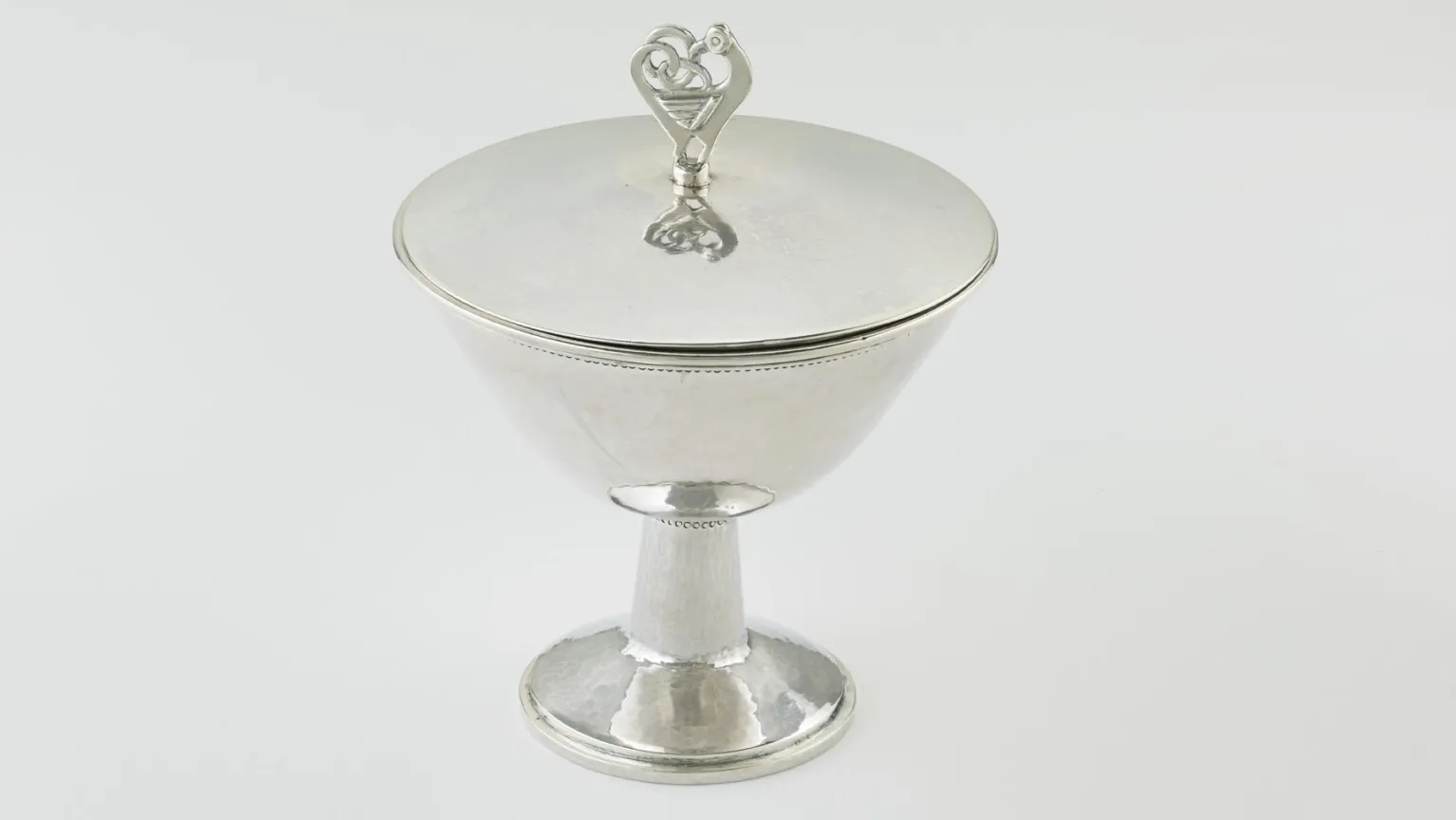
View Covered Cup, 1932, by Arthur Nevill Kirk with Eliel Saarinen (attributed) in the Milwaukee Art Museum's collection
Made by Arthur Nevill Kirk, a leading British American silversmith, and likely designed in partnership with Eliel Saarinen, a key figure in American modern architecture, this covered cup is a hybrid object. It sits at the intersection of history, folk culture, and modernism, representing a uniquely American story of craft and design.
Kirk came to the United States from England to join the workshops and faculty at Cranbrook Academy of Art in Michigan, where he worked from 1927 to 1933. It was during this time that he produced this covered cup, likely in collaboration with Finnish American architect Eliel Saarinen. Though the two had a contentious relationship and different aesthetics, they collaborated on a silver container and a footed bowl, both of which bear strong resemblance to this cup. For this reason, despite only Kirk’s name being on the cup, we believe Saarinen likely contributed to the design.
The cup melds Kirk’s taste for restrained and religiously inflected work with Saarinen’s more romantic flair for decoration. Though in the United States he was seen as a modernist, Saarinen, who immigrated to the Unites States from Finland in 1923, was closely aligned with the National Romanticism movement earlier in his career in Finland. He regularly returned to more rustic motifs well into his time in the United States, and the blocky grouse—a national bird of Finland—on the finial of the cup reflects Saarinen’s approach of marrying Finnish folk culture to his more contemporary tendencies.
This cup reflects the unlikely yet productive collaboration between Saarinen, a key agent of modernity, and Kirk, an artisan whose skill and technique were steeped in history. The cup’s two creators held vastly different perspectives on questions of history, artistry, and modernism. Yet, or perhaps because of their dramatic differences, they produced a work imbued with both elegance and charm.
Social Rx Organizations
Social Rx Wisconsin
The Wisconsin Social Rx Pilot steering committee is made up of arts, health, and policy leaders across the state, who are working to secure private donors and grant funding to launch the pilot. Dane County, Milwaukee County, and a multi-county rural area will be the initial pilot program locations, with the intention to scale Social Prescribing state-wide after the pilot is complete.
Social Prescribing USA
Inspired by the power of social connection and community-based activity to improve health, we are committed to the advancement of social prescribing in the United States.
National Organization for Arts and Health
NOAH builds community to amplify, educate about, and advocate for the power of the arts to improve health and wellbeing for all people.
SocialRx
Delivering evidence-based solutions for the dual mental health and loneliness epidemics.
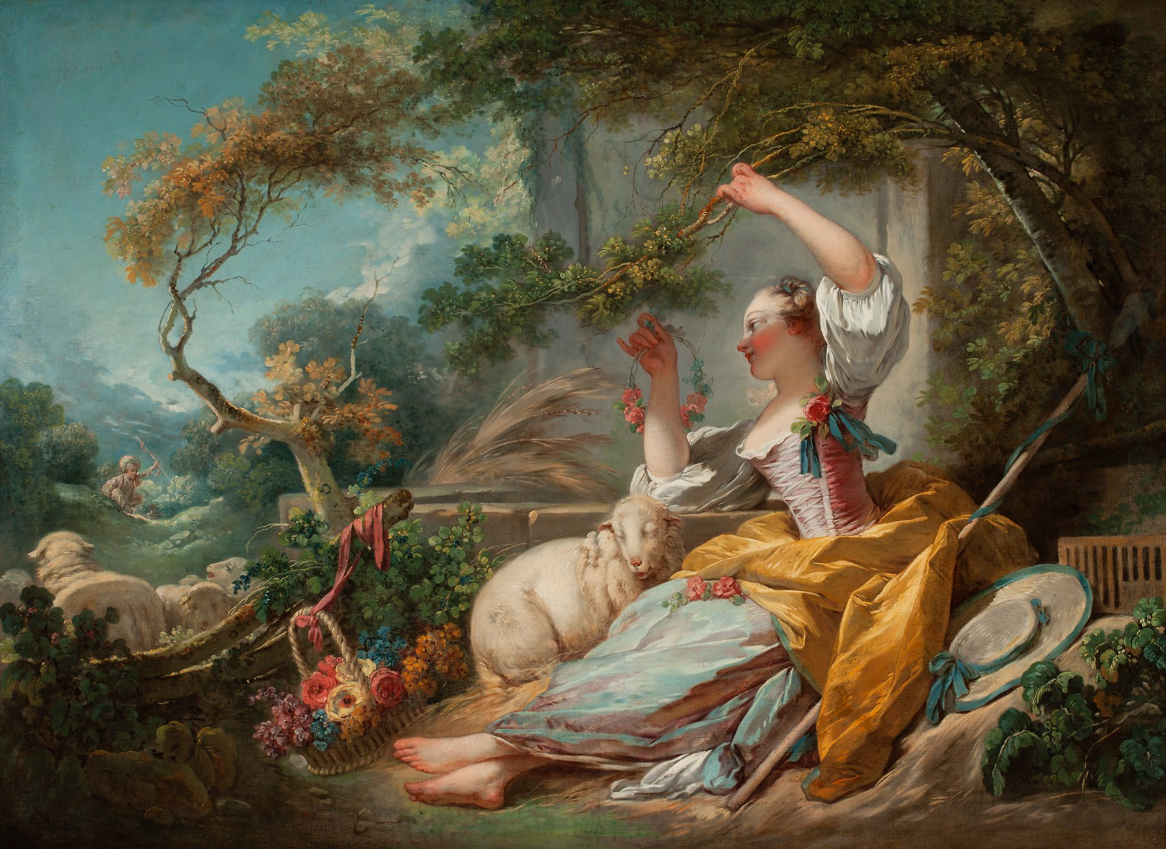
Virtually view The Shepherdess by Jean-Honoré Fragonard in one of Milwaukee Art Museum's galleries
Perched delicately on a hillside surrounded by sheep and dressed in fashionable and revealing costume, the young shepherdess in this word embodies the lighthearted and effervescent character of eighteenth-century French Rococo art. Fragonard, and influential painter of this period, presents us with a scene full of amorous possibiliities, as the young woman awaits her lover, whom we see climbing over a distant hill in the left background. The focus on themes of love and often illicit courtship grew out of the wealthy, idle culture of the French court of King Louis XV (1710-1774) and, most notably, his mistress Madame de Pompadour (1721-1764) - a pair whose abuses ultimately set the state for the French Revolution.